Search engine optimization has changed quietly but deeply over the last few years. Ranking a page today is no longer about guessing keywords or stuffing phrases. It is about understanding search intent, structuring content clearly, and answering questions better than anyone else. This is where SEO AI Tools On Page SEO 2026 start to matter in a very real way.
I work hands on with SEO AI tools every week, testing how they help real pages improve clarity, structure, and rankings. What I have learned is simple. AI does not replace human judgment. It supports it. When used correctly, AI tools help you see gaps, fix weak sections, and publish pages that feel complete and useful to readers.
In this guide, I will walk you through what on page SEO really means in 2026, why AI tools have become essential, and which SEO AI tools actually help in day to day work without making content feel robotic.
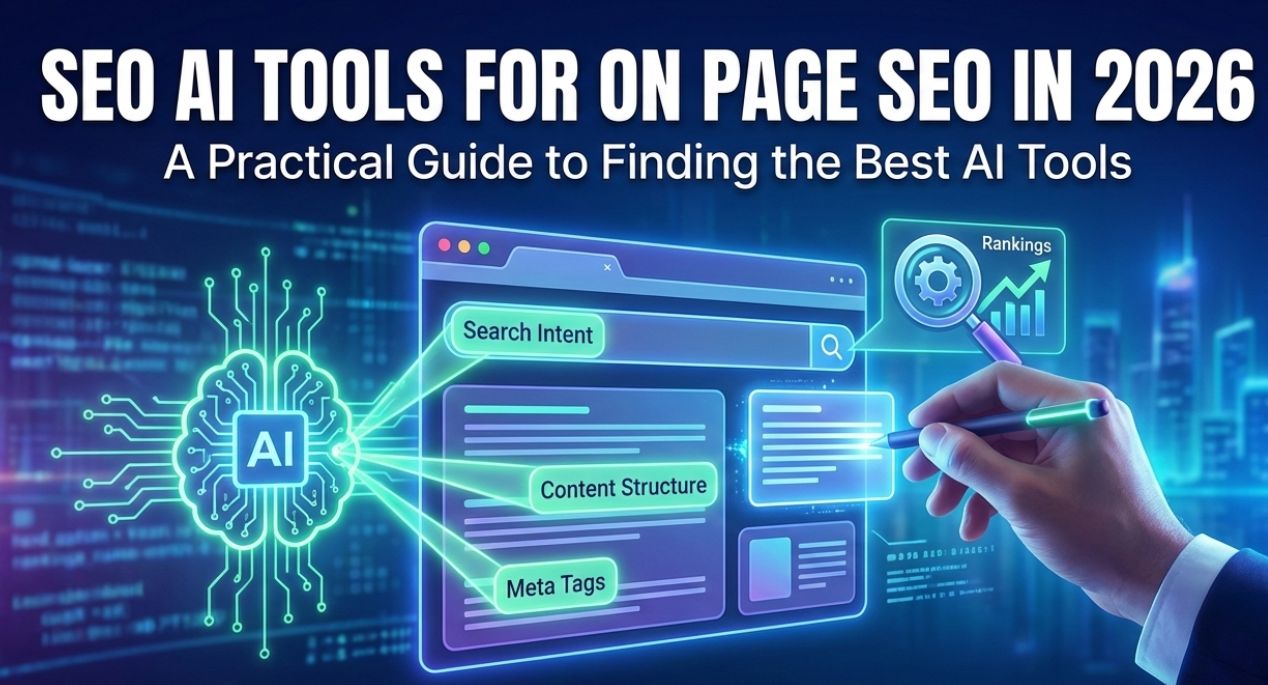
SEO AI Tools for On Page SEO in 2026
Table of Contents
What On Page SEO Means in 2026
On page SEO is everything you control directly on your website page. This includes the title, meta description, headings, internal links, images, page structure, and content depth. In 2026, on page SEO is less about tricks and more about clarity.
Search engines now understand topics, relationships, and user intent far better than before. That means your content must answer real questions in a logical flow. SEO AI tools help by analyzing top ranking pages and showing what topics, terms, and structure users expect to see.
Instead of guessing, you get data driven guidance. This is why SEO AI Tools On Page SEO 2026 are becoming part of almost every serious content workflow.
Why SEO AI Tools Matter for On Page SEO Today
Search results change faster than most people realize. What ranked six months ago may slowly lose visibility if it does not match current intent. SEO AI tools give you a live snapshot of what is working now.
Tools like Surfer, Clearscope, MarketMuse, Frase, and Semrush SEO Writing Assistant scan the search results and highlight patterns. They show common headings, important subtopics, and readability levels. This allows you to align your content with real user expectations without copying anyone.
The biggest benefit is confidence. You publish knowing your page is structurally complete, readable, and relevant.
How SEO AI Tools Help Improve Titles and Meta Descriptions
Titles and meta descriptions are often rushed, but they are critical. SEO AI tools help by showing how top pages frame their titles and what language attracts clicks.
I usually start every article by running a brief in an AI tool. I look at the main topic, supporting phrases, and tone. Then I write a clear title that promises value, not hype. The same goes for meta descriptions. They should explain what the reader will gain, not repeat keywords.
This process alone improves click through rate and sets the foundation for strong on page SEO.
Structuring Content with Headings Using AI Guidance
Good structure makes content easier to read and easier to rank. SEO AI tools highlight missing sections and suggest logical subtopics.
Instead of long walls of text, I use clear H2 and H3 sections that answer one idea at a time. AI tools help me see where competitors cover something I missed. I then add that section in my own words, with my own perspective.
This approach keeps content human while ensuring completeness, which is essential for SEO AI Tools On Page SEO 2026 success.
Free and Paid SEO AI Tools You Can Use
Not everyone wants expensive software. The good news is that there are both free and paid SEO AI tools available.
Free AI tools for SEO optimization can help with basic outlines, keyword ideas, and readability checks. Paid tools go deeper by analyzing SERPs, grading content, and tracking changes.
The key is not the price, but how you use the tool. Even the best SEO AI tools on page SEO work poorly if you blindly follow scores without thinking.
How I Use SEO AI Tools in a Real Workflow
My workflow is simple and repeatable. First, I choose a primary topic and supporting intent. Then I write a rough draft in plain language without worrying about SEO.
After that, I paste the draft into an SEO AI tool. I review missing topics, adjust headings, improve clarity, and shorten complex sentences. I add internal links and image alt text. Finally, I check readability and originality.
This blend of human writing and AI guidance is what makes the content feel natural while still being optimized.
SEO AI Tools vs AI Writing Agents
Many tools now call themselves AI agents. They are good at generating text quickly, but they often lack grounding in search intent.
SEO AI tools are different. They focus on what ranks and why. They help with on page elements like headings, topic coverage, and internal linking.
In my experience, the best results come from combining both. Use an AI writer for a clean first draft if needed, then optimize it using SEO AI tools on page SEO.
Languages and International SEO Support
Most SEO AI tools work best in English, but many now support multiple languages. Before planning international content, always test a sample page.
Some tools clearly list supported languages, while others require testing. This step avoids weak translations and helps maintain quality across regions.
Limitations of SEO AI Tools You Should Know
SEO AI tools are guides, not decision makers. They cannot fully understand your audience, brand voice, or goals.
They also rely on current SERP data, which means they can sometimes push you toward similarity. This is why human judgment matters. Use AI suggestions to improve clarity, not to copy.
When used thoughtfully, SEO AI tools enhance content instead of flattening it.
The Future of SEO AI Tools On Page SEO 2026
Looking ahead, SEO AI tools will become more predictive. Instead of only analyzing what ranks now, they will help forecast shifts in intent and content expectations.
However, the core principle will remain the same. Clear writing, helpful structure, and honest answers will always win. AI simply helps you reach that standard faster.
Final Thoughts
SEO AI Tools On Page SEO 2026 are not shortcuts. They are support systems. When you use them with care, they help you publish better pages, faster, without losing your voice.
My advice is simple. Choose two or three tools that fit your workflow. Learn how they think. Then combine their guidance with your own understanding of the topic.
Read More: AI Trends in 2026 That Will Affect Work, Learning, and Creativity