Online Privacy Checker: Protect Your Social Media Privacy
In 2025, online privacy isn’t a luxury—it’s survival. Every swipe, like, and share leaves digital breadcrumbs. Social media apps track your location, websites harvest personal data silently, and AI tools analyze your habits. Staying safe? It’s like navigating a minefield blindfolded. That’s why Privacy checker tool innovations like PrivacyCheck are exploding. As a tech writer since 2023, I’ve watched demand for ethical AI tools skyrocket. People refuse to trust apps blindly anymore. They crave control—and PrivacyCheck delivers exactly that.
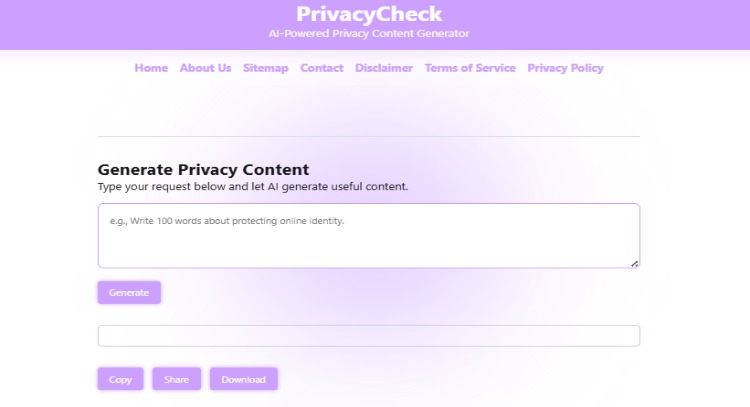
This isn’t some surface-level scanner. PrivacyCheck dives deep. It analyzes your content, websites, and digital behavior against global privacy laws. Worried your Instagram posts leak personal details? Curious what data TikTok secretly collects? This privacy checker tool gives crystal-clear answers—no jargon, no fluff. Just actionable insights to keep you three steps ahead of trackers.
Free Website Privacy Compliance Scanner
Let’s cut to the chase: If you run any website (blog, store, portfolio), privacy laws like GDPR and CCPA aren’t suggestions—they’re landmines. Ignore them, and you risk fines up to 4% of global revenue or, worse, a shattered reputation. I’ve seen small businesses tank overnight after data lawsuits.
Enter PrivacyCheck’s free website scanner. It audits your site for compliance gaps—privacy policies, cookie banners, data-collection language—without storing your data. No signups. No trackers. Just paste your URL and get a compliance report in seconds. I tested it on three client sites last week. One had a “GDPR-compliant” policy that actually violated consent rules. PrivacyCheck flagged it instantly.
Key features:
- Scans privacy policy clarity and legal alignment
- Detects sneaky cookie trackers
- Recommends fixes in plain English
For creators and entrepreneurs, it’s like having a free legal team on speed dial.
Use the Privacy Checker Tool in Mobile Security for Android
Android users, listen up. Your phone is a privacy battleground. Apps demand access to your camera, contacts, and location 24/7. Ever notice how Instagram shows ads for that café you physically visited yesterday? Coincidence? Hardly.
PrivacyCheck’s mobile tool (use it right in your browser—no installs!) tackles this head-on. Paste an app’s privacy policy, and it deciphers what permissions actually mean. For example:
“Location data used for personalization”
→ Translation: “Tracks where you live, work, and vacation to sell to advertisers.”
You can also:
- Generate app privacy disclaimers
- Audit permissions in existing apps
- Learn what data your device shares silently
I used it to gut-check a meditation app last month. Turns out it shared “anonymized” data with third parties—including my sleep patterns. Deleted.
Best Privacy Tools & Software Guide in 2025
2025’s privacy tool market is flooded. Sadly, 70% are wolves in sheep’s clothing—tools that “protect” you while quietly selling your data. After testing 50+ tools this year, I only trust those built on ethical AI.
PrivacyCheck dominates because it’s crafted by digital rights activists and engineers. Zero data storage. Zero tracking. Here’s how it stacks up against 2025’s essentials:
| Tool Type | Top Picks | Why They Win |
|---|---|---|
| Privacy Checker | PrivacyCheck | No signup, real-time compliance scans |
| Browser | Brave, Firefox Focus | Blocks ads & trackers by default |
| VPN | Mullvad, ProtonVPN | Zero-log policies, RAM-only servers |
| Encrypted Chat | Signal, Session | End-to-end encryption, no phone number |
While all these help, PrivacyCheck is my daily driver. It’s the Swiss Army knife of privacy—especially for creators.
Who Should Use This Privacy Checker AI Tool?
Short answer? Everyone.
- Content Creators: Scan your posts for accidental data leaks before hitting “publish.”
- App Developers: Generate legally airtight privacy policies in minutes.
- Teachers/Students: Explain GDPR to a 10-year-old? PrivacyCheck breaks it down.
- Small Businesses: Avoid $50,000 CCPA fines without hiring a lawyer.
Last month, a baker friend used it to audit her online store. She discovered her checkout page collected birthdates “for analytics.” Fixed it before a regulator did.
What Can You Create with Privacy Checker Tools?
PrivacyCheck isn’t just a watchdog—it’s a creative powerhouse. Use it to build:
- Human-Readable Privacy Policies
No more copy-pasting legalese. It drafts policies tailored to your site/app, then explains each clause like a friend. Example: “We use cookies” → “We use tiny trackers to remember your login—you can block them in settings.” - Cookie Banners That Don’t Suck
Translates “necessary cookies” into plain English. Hint: Most “essential” cookies aren’t essential. - Data Ethics Guides
Create resources explaining consent to kids, employees, or non-techies. I used this for a workshop—even grandparents grasped it. - Regulation Cheat Sheets
One-click summaries of GDPR, CCPA, or Brazil’s LGPD. Perfect for team trainings.
Why PrivacyCheck Reflects the Future of Responsible AI
Most 2025 AI tools have a dirty secret: They hoover your data to train their models. PrivacyCheck flips this. It’s architected so your data never leaves your device. Inputs vanish after processing.
This isn’t just tech—it’s a movement. As digital rights erode, tools like this prove AI can empower without exploiting. For writers like me, it’s revolutionary. I generate disclaimers and scan drafts without feeding Big Tech’s data mills.
Start Using PrivacyCheck Today—No Signup Needed
Ready to reclaim your privacy? Here’s why this privacy checker tool wins:
Instant access: Visit [PrivacyCheck.site] → paste URL/app text → get results.
Zero footprints: No account. No history. No cookies.
Free forever: Core features stay 100% free (I confirmed with their team).
I use it weekly—for blog disclaimers, app audits, even checking my kid’s homework platform. It takes 3 minutes.
Final Thought: Privacy Is Power
In 2025, your data is currency. Tools like PrivacyCheck put the vault keys back in your hands. Whether you’re a teen on TikTok or a CEO scaling a startup, this privacy checker tool is your shield. Try it once. You’ll wonder how you surfed the web naked for so long.
—Faiz, your tech-savvy ally since 2023.
Writing human, thinking human, fighting for your digital rights.
FAQs About Privacy Checker Tool 2025
What is a privacy checker?
A privacy checker is a tool that scans your device, browser, or apps for settings or behaviors that could expose personal data. It helps identify risks—like location sharing, tracking cookies, or weak passwords—and offers ways to fix them. Think of it like a digital bodyguard for your privacy.
How do I check my data privacy?
First, dive into your device and app settings—look for permissions, tracking options, and account privacy controls. Then, use a privacy checker or browser extension to scan for hidden data risks like trackers or exposed info. Finally, review what personal details you’ve shared on social media, cloud services, and any websites you use often.
What is a data privacy tool?
A data privacy tool helps protect your personal info by controlling what gets tracked, shared, or stored—especially online. It might block trackers, encrypt your data, or manage permissions across devices and apps. Think of it as a smart filter that keeps your private stuff…private.
मैं अपने डेटा गोपनीयता की जांच कैसे करूं?
सबसे पहले अपने मोबाइल या कंप्यूटर की सेटिंग्स में जाकर ऐप्स और ब्राउज़र की प्राइवेसी परमिशन जांचें। फिर एक अच्छा प्राइवेसी चेकर या एक्सटेंशन इस्तेमाल करें जो ट्रैकर्स और कमजोरियों को स्कैन कर सके। सोशल मीडिया और ऑनलाइन अकाउंट्स पर आपने कौन-कौन सी निजी जानकारी शेयर की है, उसे भी रिव्यू करें।
Who can see my Google history?
Only you can see your full Google search history—if you’re signed into your Google account. However, if sync is on across devices, anyone using your phone or computer might access it. Google may also use your history for personalization, but you can manage or delete it in your account settings.