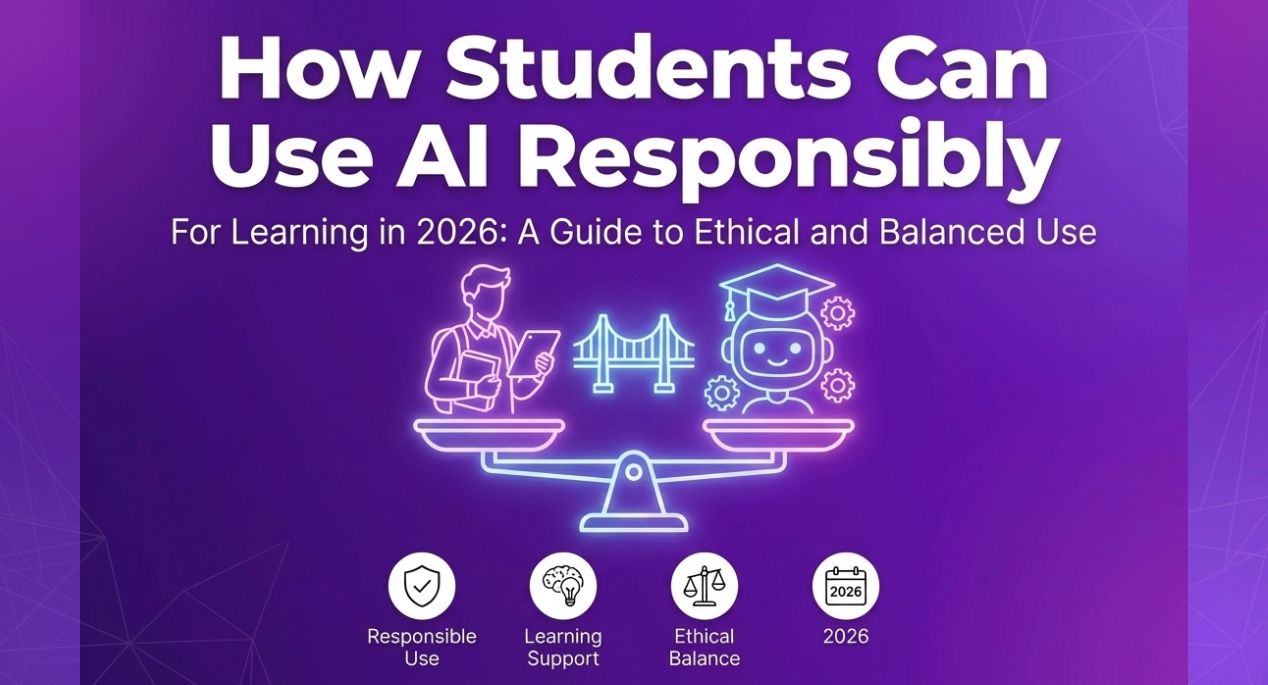
Artificial intelligence is becoming a common part of student life. From helping with research to organizing notes and improving writing clarity, AI tools are now easily accessible to learners of all ages. As this technology becomes more widespread, an important question arises. How students can use AI responsibly while still learning honestly and developing real skills.
This article is written to guide students, parents, and educators through responsible AI use in 2026. It explains how students can use AI as a learning support rather than a shortcut. The goal is not to discourage AI use, but to encourage thoughtful, ethical, and balanced use that strengthens learning instead of weakening it.
How Students Can Use AI Responsibly
Table of Contents
Why Responsible AI Use Matters for Students
AI tools are powerful, but learning is still a human process. When students rely too heavily on AI without understanding the material, they risk losing critical thinking skills. This is why understanding how students can use AI responsibly is becoming an essential part of modern education.
Responsible use means using AI to assist learning, not replace effort. When students use AI correctly, it can clarify ideas, improve understanding, and support independent thinking. When misused, it can lead to confusion, dependency, and academic integrity issues.
Understanding What Responsible AI Use Really Means
Responsible AI use does not mean avoiding AI completely. It means knowing when and how to use it. Students can use AI to explain difficult concepts, summarize information, or help structure ideas.
How students can use AI responsibly begins with intent. If the intent is learning, AI becomes helpful. If the intent is copying or avoiding work, problems start to appear. Responsibility comes from awareness, not restriction.
Using AI as a Learning Assistant Not a Replacement
AI should act like a study partner, not a substitute for thinking. For example, students can ask AI to explain a topic in simple words, provide examples, or help revise notes.
This approach allows students to stay actively involved. When students use AI responsibly for learning in 2026, they remain curious and engaged instead of passive. AI supports understanding, but the student still does the learning.
Ethical Use of AI in Writing and Assignments
Writing is one area where AI use raises concerns. Many students ask whether it is wrong to use AI for school work. The answer depends on how it is used.
Ethical use of AI in academic writing means using it for guidance, not submission. Students can use AI to improve grammar, organize ideas, or understand structure. Copying AI generated text directly into assignments without understanding is not responsible use.
How to use AI ethically in writing involves transparency and effort. Students should always review, rewrite, and personalize any AI assisted content.
AI and Essays What Is Acceptable and What Is Not
Students often search for how to use AI ethically in writing essays. A responsible approach is using AI for brainstorming, outlining, or feedback.
Writing the final essay should still be the student’s own work. Ethical use of AI in academic writing respects the learning process and academic rules set by schools or universities.
Is It Wrong to Use AI for School
Many students worry about whether using AI is allowed. The reality is that most educational institutions are still developing clear guidelines.
Instead of asking if AI use is wrong, it is better to ask how students can use AI responsibly within their school’s expectations. When in doubt, students should consult teachers or use AI only for learning support.
How Students Can Use AI Responsibly in the Workplace
AI is also becoming part of internships and early careers. Learning responsible use early helps students transition into professional environments.
How students can use AI responsibly in the workplace includes using AI for research, planning, and communication while maintaining honesty and accountability. Employers value AI literacy, but they also value integrity and independent problem solving.
Teaching Students to Use AI Responsibly
Parents and teachers play a key role in shaping responsible AI habits. Instead of banning AI tools, guiding students on ethical use is more effective.
How teachers and parents can help students use AI responsibly includes open discussions, clear boundaries, and encouraging critical thinking. Teaching students to question AI outputs helps them become thoughtful users rather than blind followers.
Should Students Be Allowed to Use AI Tools
Completely banning AI tools is not realistic in 2026. AI is already integrated into many platforms students use daily.
The better approach is allowing AI use with guidance. When students understand how to use AI ethically and responsibly, it becomes a learning asset rather than a risk. Balanced policies create trust and accountability.
Common Mistakes Students Make With AI
One common mistake is using AI without verifying information. AI can sometimes provide incorrect or incomplete answers.
Another mistake is overusing AI. Responsible learning requires effort, reflection, and practice. Understanding how students can use AI responsibly also means knowing when not to use it.
Building Healthy AI Habits as a Student
Healthy AI habits include limited use, clear purpose, and regular self reflection. Students should ask themselves whether AI is helping them understand or just helping them finish faster.
When students develop these habits early, AI becomes a long term support tool rather than a dependency.
Can Students Use AI to Create and Sell Content
Questions like can you use AI to write a book and sell it are becoming common. The ethical answer depends on transparency, originality, and platform rules.
For students, learning ethical content creation means understanding copyright, originality, and disclosure. These lessons are valuable far beyond academics.
Preparing Students for an AI Aware Future
AI literacy is now part of education. Understanding how students can use AI responsibly prepares learners for future careers, higher education, and digital citizenship.
Responsible AI use builds trust, confidence, and skill development. It teaches students how to work alongside technology instead of being controlled by it.
Conclusion
AI is not the enemy of education, nor is it a shortcut to success. It is a tool that reflects how it is used. When students understand how students can use AI responsibly, they gain the ability to learn more deeply, think more clearly, and grow more independently.
In 2026, responsible AI use is a shared responsibility between students, teachers, and parents. With the right guidance and mindset, AI can support learning while preserving honesty, creativity, and critical thinking. The future of education is not about choosing between humans and AI, but about learning how both can work together responsibly.
Read More: Beginner’s Guide to Using AI Tools for Learning and Productivity in 2026