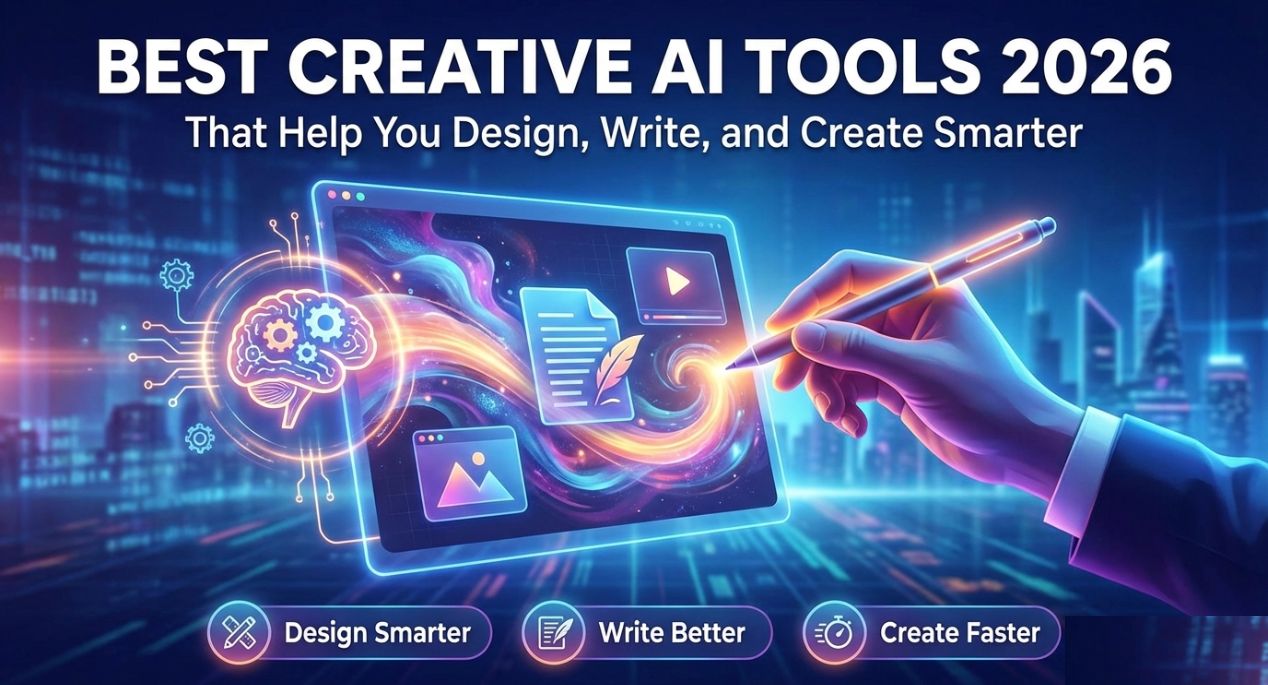
Creativity has always been about imagination, but in 2026, imagination no longer works alone. Artificial intelligence has quietly become a creative partner for millions of people around the world. From designing visuals to writing stories, composing music, and editing videos, AI is helping people turn ideas into reality faster than ever before.
The rise of Best Creative AI Tools 2026 is not about replacing artists, writers, or designers. It is about giving them a starting point, a fresh angle, or simply the confidence to explore new ideas. Whether you are a student, a content creator, or someone building a brand from scratch, creative AI tools can help you think more freely and work more smoothly.
In this article, we will explore what creative AI tools really are, why they matter in 2026, and which tools are genuinely useful for boosting imagination without taking away your personal touch.
Table of Contents
Why Creative AI Tools Matter More Than Ever in 2026
Creativity often slows down not because ideas are missing, but because time, energy, or clarity is limited. Creative AI tools step in exactly at that moment. They help you move from a blank screen to a rough draft, from a loose thought to a visual, or from a mood to a finished output.
In 2026, creative AI tools have become more natural to use. You do not need technical skills or complex instructions. Simple prompts are enough to generate designs, text, music, or video concepts. This makes creativity more accessible to everyone, not just professionals.
The biggest change is speed combined with flexibility. You can test ideas quickly, discard what does not work, and refine what feels right. This freedom is why creative AI tools are now seen as imagination boosters rather than shortcuts.
What Makes the Best Creative AI Tools 2026 Stand Out
Not all AI tools feel creative. The best ones support your thinking instead of overpowering it. They offer suggestions, variations, and inspiration without forcing a fixed style.
The Best Creative AI Tools 2026 share a few common qualities. They are easy to use, adaptable to different creative goals, and flexible enough to let users stay in control. Many also offer free versions, making them ideal for beginners who want to experiment before committing.
Another key factor is flow. Tools that allow smooth back-and-forth interaction feel more like collaboration. This is where flow AI tools and similar systems are gaining attention in 2026.
Canva AI for Design and Visual Branding
Canva AI continues to be one of the most popular creative platforms because it removes fear from design. In 2026, its AI features help users create layouts, choose colors, suggest fonts, and adapt designs for different platforms automatically.
For people with no design background, Canva AI makes visual creation approachable. For experienced designers, it saves time on repetitive tasks. This balance makes it one of the most practical creative AI tools available today.
It is especially useful for social media graphics, presentations, posters, and simple brand assets.
Runway ML for Video Creation and Editing
Video creation used to require heavy software and long learning curves. Runway ML changes that experience. Its AI driven tools help users edit videos, remove objects, apply cinematic effects, and even generate scenes using text prompts.
In 2026, Runway ML feels like a creative studio that listens. You can experiment freely without worrying about technical limits. This makes it popular among YouTubers, filmmakers, and digital creators who want fast results without losing creative control.
ChatGPT Vision for Writing and Creative Ideas
Writing often starts with confusion rather than clarity. ChatGPT Vision helps by turning scattered thoughts into structured ideas. In 2026, its multimodal features allow users to work with both text and visuals, making it useful for storytelling, marketing, and content planning.
Writers use it to outline articles, improve tone, and explore different angles. Marketers use it for campaign ideas and messaging drafts. The key is that it supports thinking rather than replacing it.
MidJourney for AI Art and Visual Imagination
For artists and visual explorers, MidJourney remains a powerful creative AI tool. It transforms text prompts into detailed digital artwork, illustrations, and experimental visuals.
In 2026, MidJourney allows deeper control over style, mood, and composition. It is not about copying art styles but about exploring visual possibilities. Many creators use it as a sketching tool for ideas before creating final work manually.
Soundraw for Music and Audio Creation
Music creation is becoming more accessible with tools like Soundraw. This AI powered music generator helps users create background tracks, beats, and mood based audio without needing instruments or technical knowledge.
In 2026, Soundraw is popular among podcasters, video creators, and indie filmmakers. It allows quick experimentation with sound while keeping the creative direction in the hands of the user.
Adobe Firefly for Professional Creative Work
Adobe Firefly integrates AI into familiar creative software. Instead of learning new tools, users enhance existing workflows in Photoshop, Illustrator, and Premiere Pro.
Firefly helps with background changes, image expansion, and quick edits. For professionals, this means less time on repetitive tasks and more time on creative decisions. This is why it remains one of the best creative AI tools for serious creators.
Copy.ai for Marketing and Content Creation
Copy.ai focuses on content creation for marketing and communication. In 2026, it emphasizes natural tone and clarity, making AI generated text feel less mechanical.
Entrepreneurs and small businesses use it for emails, ads, and social content. It works best when used as a starting point that users refine with their own voice.
Who Should Use Creative AI Tools in 2026
Creative AI tools are not limited to professionals. Students use them for presentations and projects. Businesses use them for branding and marketing. Content creators rely on them for speed and consistency.
Even beginners benefit because these tools reduce fear and complexity. The best creative AI tools help people start creating, which is often the hardest part.
How to Use Creative AI Tools Without Losing Originality
AI should support creativity, not replace it. The best results come when users treat AI as a collaborator. Start with your idea, let AI suggest options, then refine the output with your personal style.
Avoid copying outputs directly. Use them as drafts, inspiration, or building blocks. This keeps your work authentic and unique.
Final Thoughts
The Best Creative AI Tools 2026 are changing how people imagine, design, and express ideas. They are not shortcuts, but creative companions that help remove friction from the creative process.
Whether you want to design visuals, write stories, compose music, or explore new ideas, these tools make creativity more accessible and enjoyable. The future of creativity is not about humans versus AI. It is about humans working alongside AI with confidence and control.
Read more: Trusting Upcoming Google AI Tool for a Smarter Tomorrow